


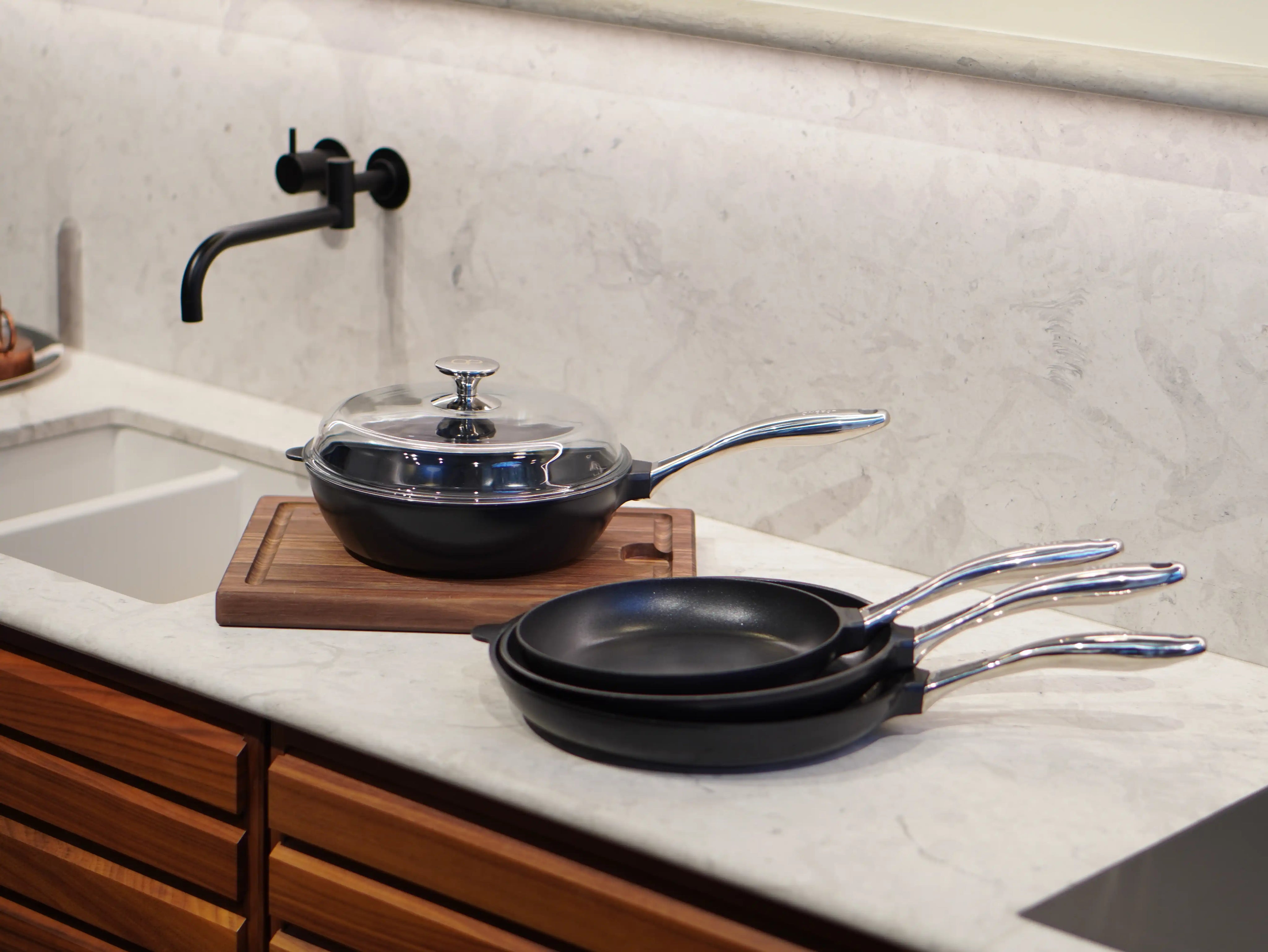
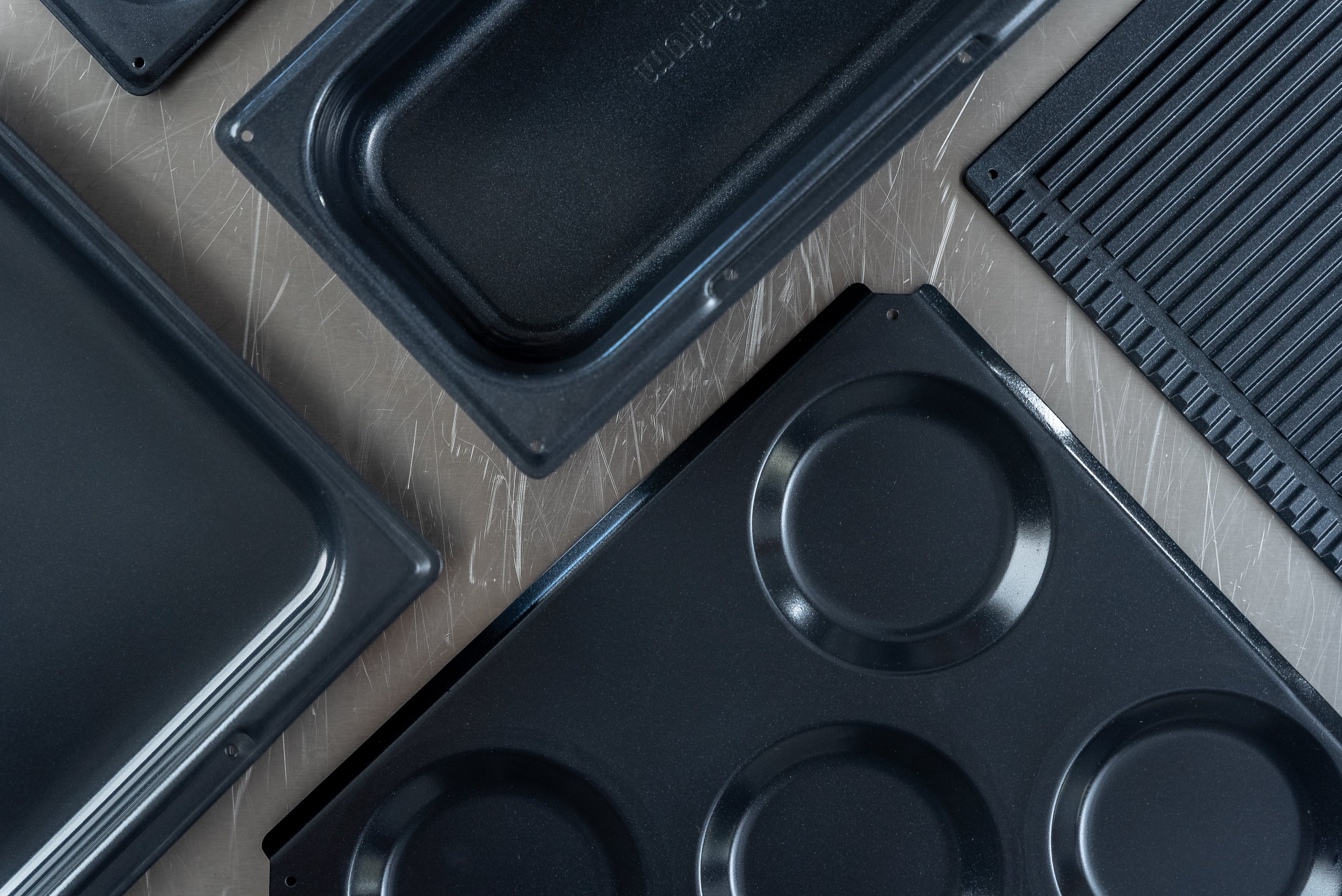
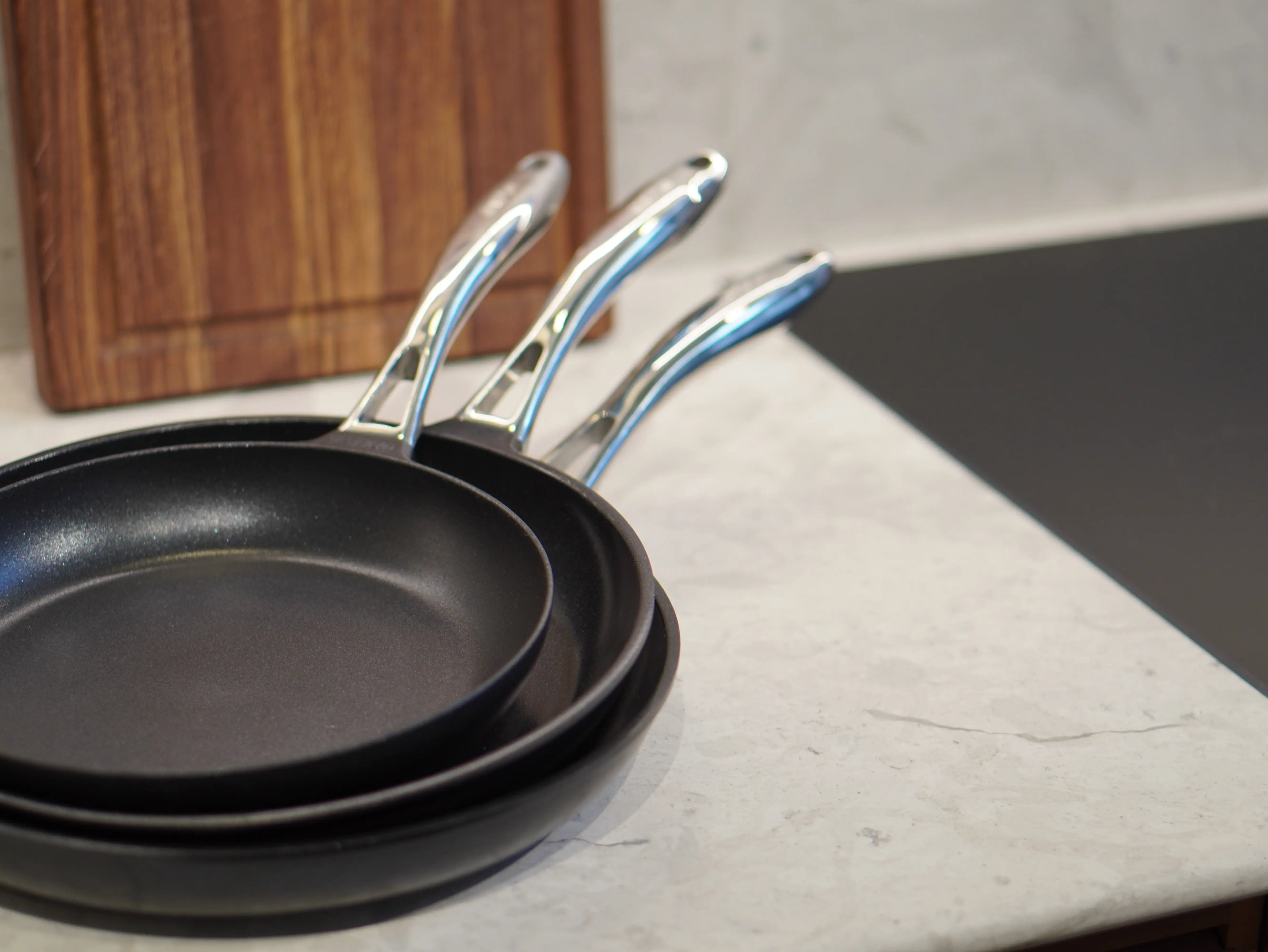
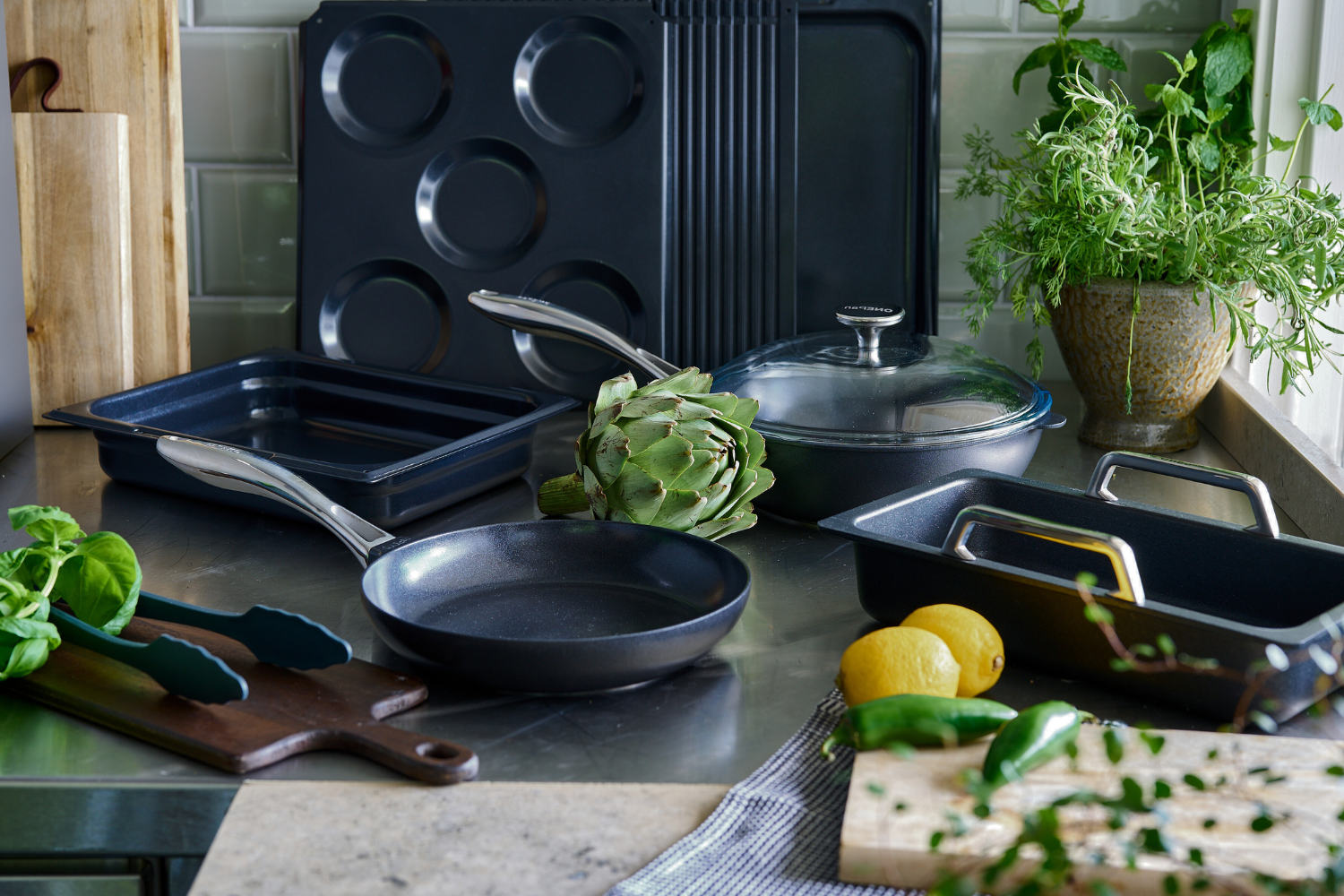


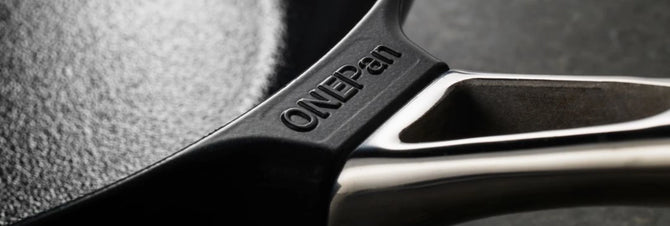
OnePan is designed to withstand everything - metal utensils, the oven, high temperatures, open flames, and the dishwasher. To help your OnePan, like other things in your home, last longer, we recommend taking care of it with love and following our advice below. This way, you will not need to restore the coating as often, which is good for both your wallet and the environment.
About PFAS-free coatings
PFAS are a nasty group of chemicals used to repel dirt from various surfaces (e.g., frying pans, ski wax, makeup, and functional clothing). PFAS are called “the forever chemical” because they can never be broken down by nature. This is why PFAS are unfortunately found in the water we drink and the air we breathe. Research has also shown that PFAS are carcinogenic and disrupt hormones, potentially affecting fertility, for example. You can feel completely confident that OnePan products are entirely free from all PFAS chemicals, not just some of them - such as PFOA.
Instead, our frying pans and baking trays are coated with a ceramic non-stick coating that is completely harmless to both the body and nature.
To help you get the most out of your OnePan and its PFAS-free coating, both in terms of lifespan and quality, here are our best tips and tricks:
Avoid overheating an empty frying pan
An empty frying pan on high heat with nothing in it to fry will fry the coating instead. One tip for seeing when the pan is ready is to add oil or butter before heating it. This gives you an indication of when the pan is hot enough to start frying. Add the food to the pan as soon as the oil or butter has heated up to prevent the pan from overheating.
Cleaning your frying pan
One of OnePan’s best features is its coated surface, which prevents food from sticking to it and also makes the pan very easy to clean. The best way to clean a non-stick pan and extend its lifespan is to wash it thoroughly by hand with hot water and green soap. Clean it carefully so that no dull areas remain afterward. When you are done, you can wipe it with a microfiber cloth to achieve a shiny surface.
Kitchen utensils
Unlike non-stick frying pans that contain PFAS, you can use all types of utensils in a OnePan, including metal utensils, since scratches are completely harmless. However, the coating will last longer if you only use utensils made of softer materials, such as wood or silicone, when cooking with or cleaning your frying pan.
Burnt food in the frying pan
Have you got burnt-on spots in the pan where everything sticks? Food may often have burnt on and not been properly washed away, forming a layer on the pan. Once your OnePan has cooled, try pouring in cold water so that it covers the burnt area. Place it on the stove and let the water boil for a few minutes. Then wash the pan thoroughly by hand with soap. Polish it with a microfiber cloth until the surface is shiny. This may restore better non-stick performance.
Excess fat in the frying pan after frying
If you have fried something that releases a lot of fat, wipe the fat out of the frying pan with a paper towel before washing it. This makes it easier to clean and is better for both the environment and your drain.
Storing your kitchen utensils
Your OnePan was delivered in a textile bag which - believe it or not - used to be hotel bed linen. We used it to protect your frying pan during its journey to you - but it is also useful for protecting your OnePan in your kitchen so that it does not scratch or rub against other pans and pots in your cupboards.